Ancient healing in the woods at St Peter and St James Hospice
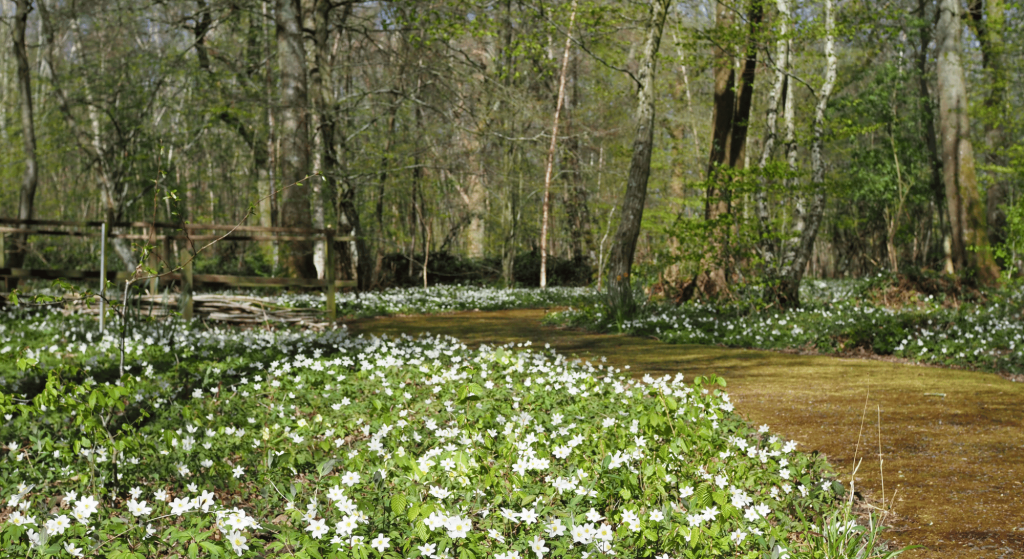
We were honoured to feature in Miriam Darlington’s Nature Notebook column for the Times on Saturday 7 March 2026, dedicated to her father Oliver.
Our ancient woodlands and location in the heart of nature are often hugely valued by patients and their loved ones, as well as by our volunteers and staff members. Thank you Miriam for these beautiful words describing our home, they mean the world to us.
Ancient healing in the woods at St Peter and St James Hospice
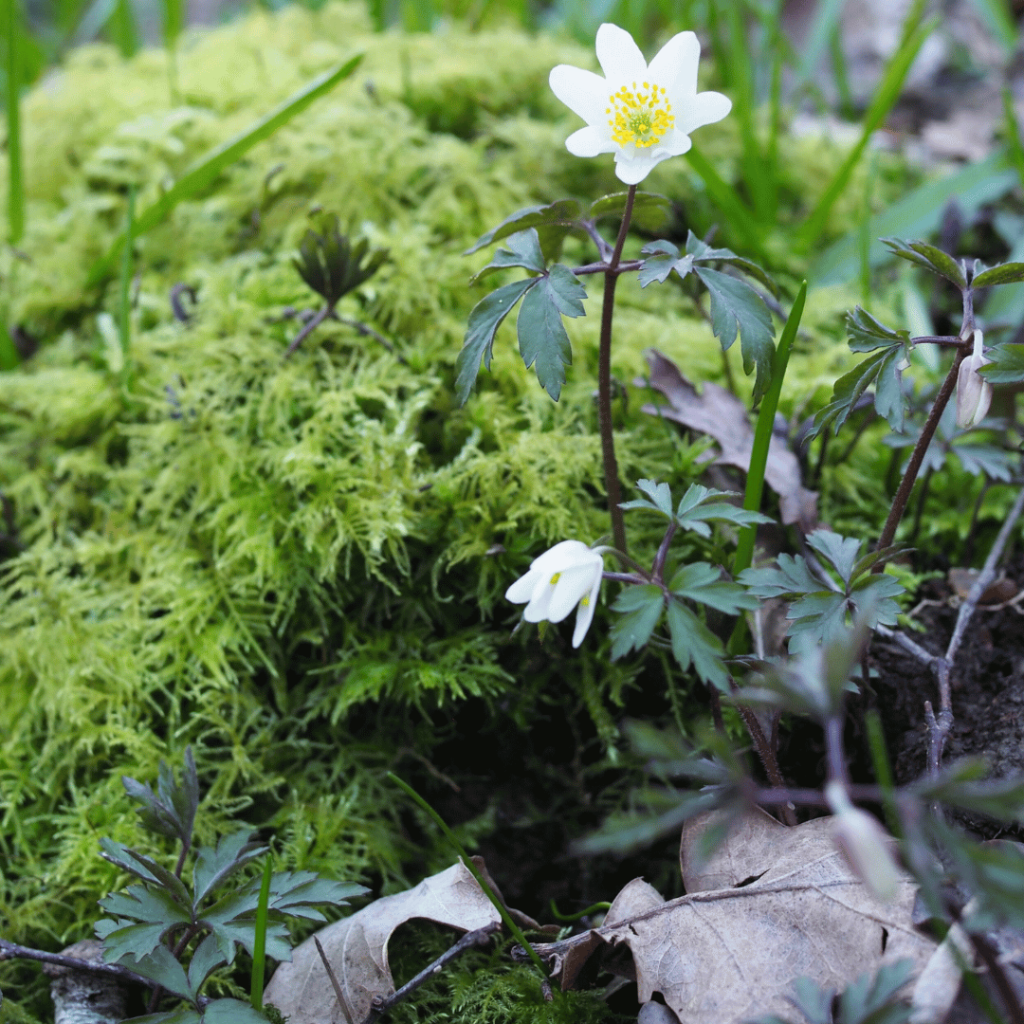
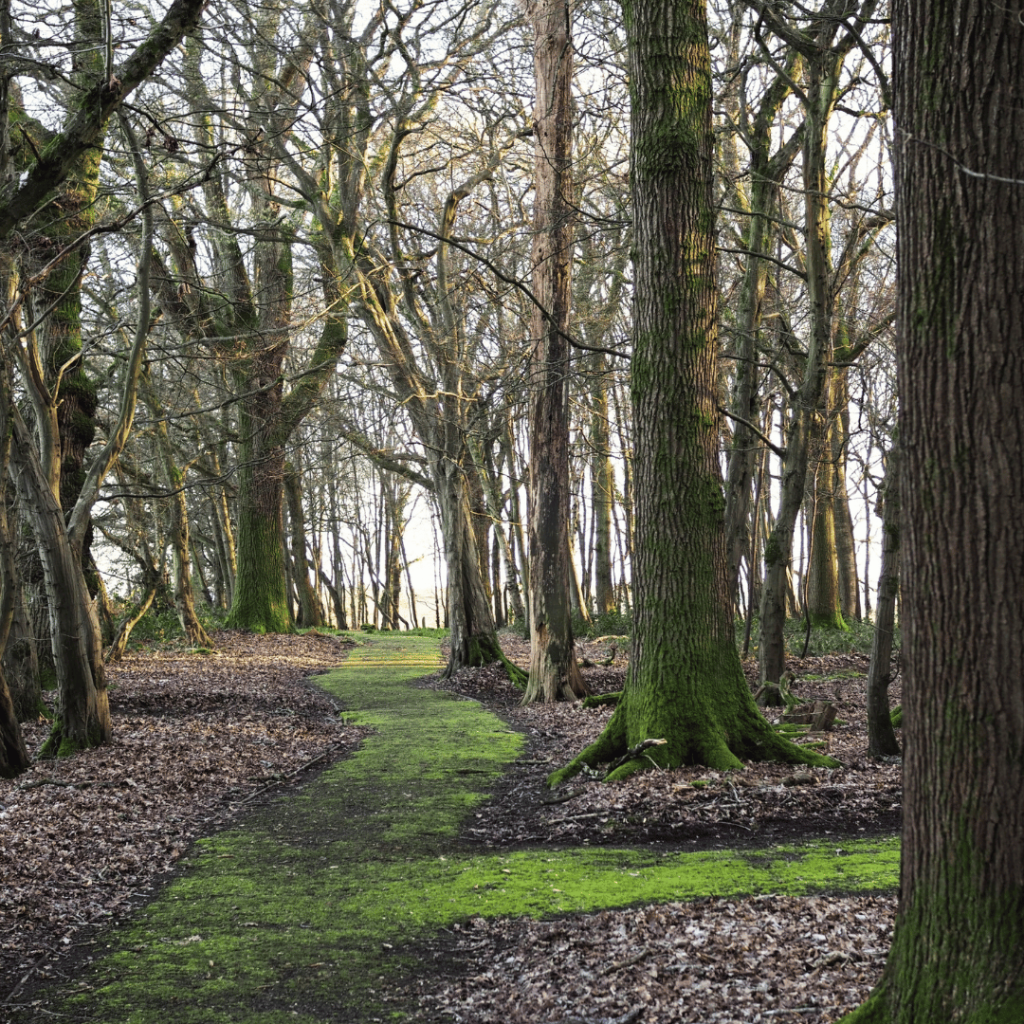
The earth at Sedgebrook Wood, Sussex, is deep with the sharp, fungal scent of mycelium. Hidden beneath layers of moss, these growths are the ecosystem’s insides, wild structures that have never felt the cut of a plough. Everywhere, intact underneath this ancient sliver of woodland, thrives a creeping complexity. Its cycles call to the imagination: a fallen branch is no longer simply wood. It is a green-furred ridge of moss, a miniature mountain range of decay for invertebrates. A rotting stump, swollen with rainwater, dissolves into a pulpy cradle for the next generation of seedlings. A prickled husk of sweet chestnut lies open amongst pale, serrated leaves from last season’s leaf-fall. Here, decay is not a failure of life, but an architect. Weeks of rain have ignited the bryophytes; the mosses glow against charcoal-grey trunks: acid-green cushions of Leucobryum huddle like puffed-up feathers covering roots. Plumes of Hypnum trace the banks in intricate-wet lace. Crustose and foliose lichens stipple pollarded trunks, gather on the bark of oaks in shades of mint and wood-ash grey, their swollen tissues drinking the clean, rain-washed air.
From the bare canopy, a nuthatch riddles the vertical world with its water-droplet song, a dweet-dweet-dweet that spirals down and around the creviced trunks. These woods surround the St Peter and St James Hospice, where my father is being cared for. I can’t experience the woods’ soothing atmosphere without feeling glassy with fragility. The trees begin their work on you before you realise, breathing a soft shift of light into the density of the air you inhale.
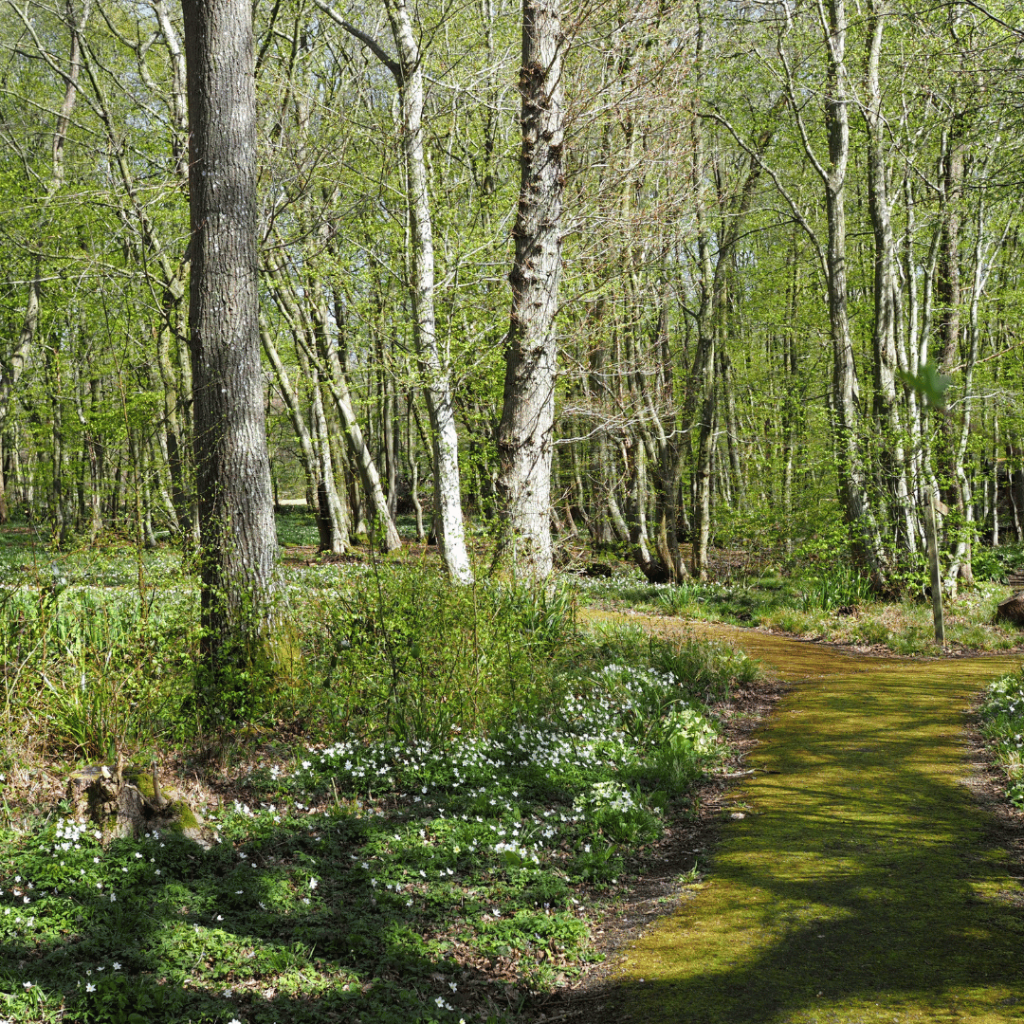
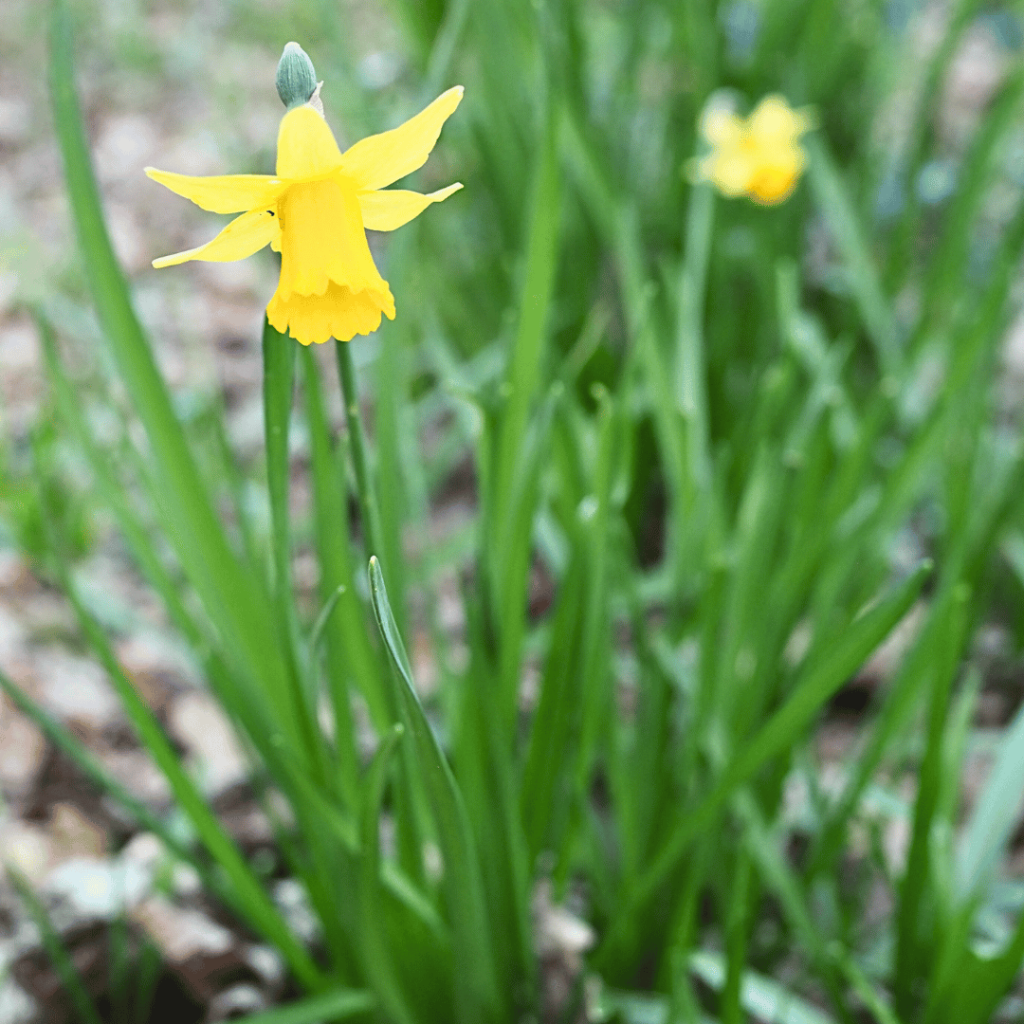
Scattered all around us here, spreading from nearby Chailey Common, an open forest of bracken and birches is flooded with pools. Trees thicken along the entrance drive that leads to the hospice buildings. Wild daffodils are splashes of sunlight. Leading into the trees, there is a mossy footpath to follow. Time blurs. Each day, a great spotted woodpecker darts between huge, bare oaks. Low evening rays warm birches. Each night, tawny owls call among moonlit branches. A green woodpecker yaffles and swoops back and forth at dawn. A nervous bevvy of female pheasants patters about on the dewy grass, the bright, plump male keeping watch. Because the woodland canopy has not thickened yet, on the forest floor, a little green sea is rising up: the first new leaves of bluebells.
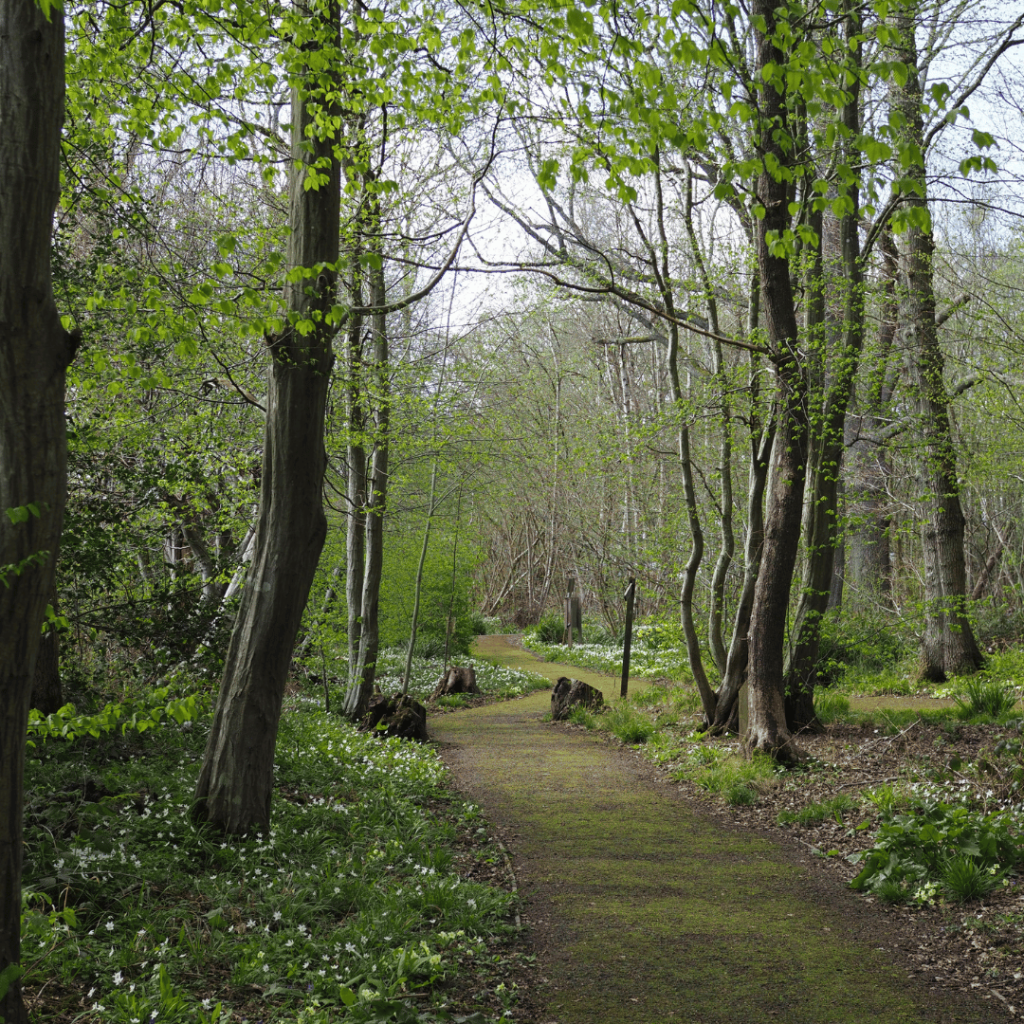
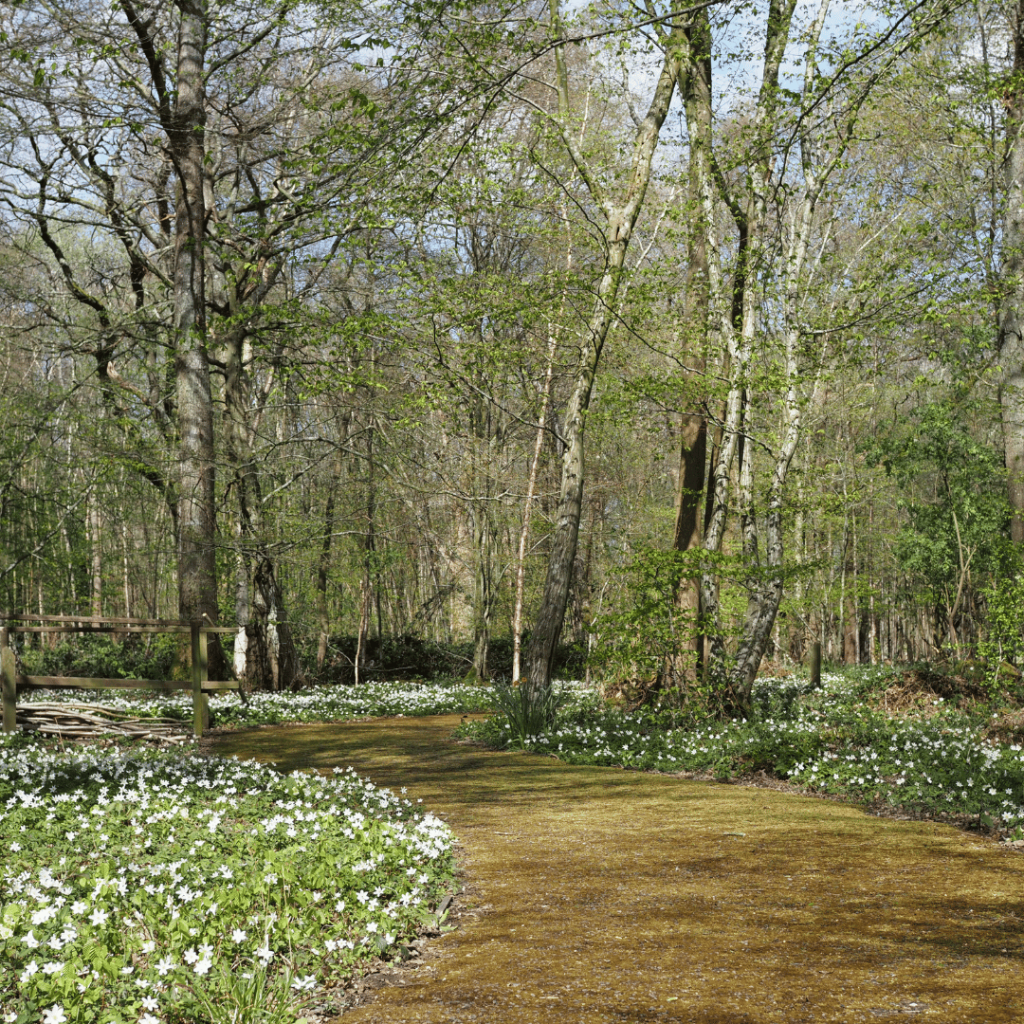
Amongst the trunks and stumps, the gently looping path is so thick with moss it seems designed as a path that is more than a path, an invitation to slow the pace, to listen and to look. They say the human eye is soothed by green. Misted for the first few days of our stay, a searing transition took place as the weather pattern burst into sunshine, and everything seemed to make a vivid shift into spring. To walk from the hospice’s inner spaces into the woodland is to experience a softening of the world, a pearlescence. The long southward view over the Ouse valley toward the distant shoulders of the South Downs had been smudged with grey, but now, under the first line of oaks, the sunlight’s rays were absolute. Inside the hospice, there was the hush; outside, the woods’ hydraulic energy was ebullient with wren sounds, blackbirds, chaffinches.
I watch the nuthatch descend the oak, the only bird capable of this gravity-defying, headfirst spiral, its slate-blue back slicked by the light. It pauses to prize or probe something into a furrow of bark, a tiny act of faith.
Enchanted snuff
Miniature black antlers poke out of a mound of moss rising over what once might have been a stump. Candlesnuff fungus. In some rural traditions, it was seen as a sign of the forest’s memory, appearing only where wood had lain long enough to forget its tree. In parts of the South Downs and Weald, it was called ‘witch’s snuff’ as it was said to mark places where witches had extinguished their candles after night‑work. Because it glows faintly under light (a trick of reflected moonlight when wet, not bioluminescence), it was sometimes thought to guide spirits and travellers along woodland paths. In Victorian naturalist circles it was used to illustrate the stages of decay, a lesson in ecological cycles. When dried, the black stems can catch a spark from flint and steel, and were once used as a fire-lighting aid; in some Sussex households, a dried piece was kept as a protective charm near the hearth to ‘snuff out’ bad luck. Its carbon‑rich black sprigs were used as an ingredient, crushed and mixed with iron salts to make a crude, dark ink.
Heart in the forest
In the pond, alongside marsh marigold and green spikes of flag iris, I find tiny circles of frogspawn. Branches reach out, casting their own calligraphy over the water. Beneath, a shadowy continuity, the woodland’s quiet heartbeat.
Miriam’s books are Otter Country and Owl Sense
To find out more about Miriam’s Nature Notebook, click here to subscribe to The Times